Skip to content

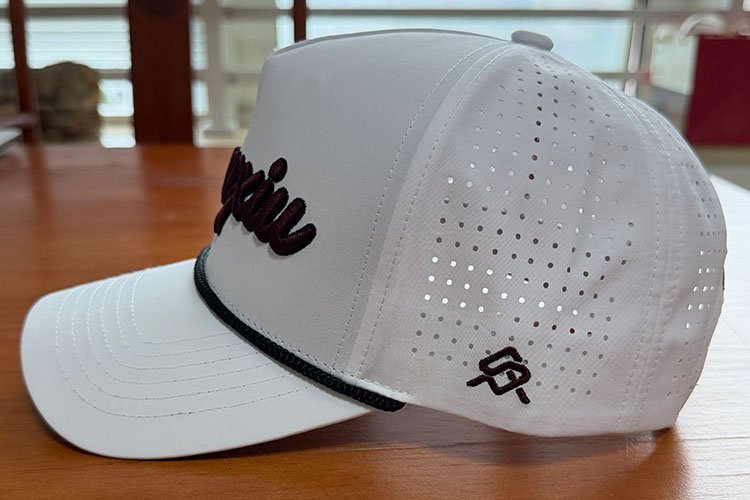
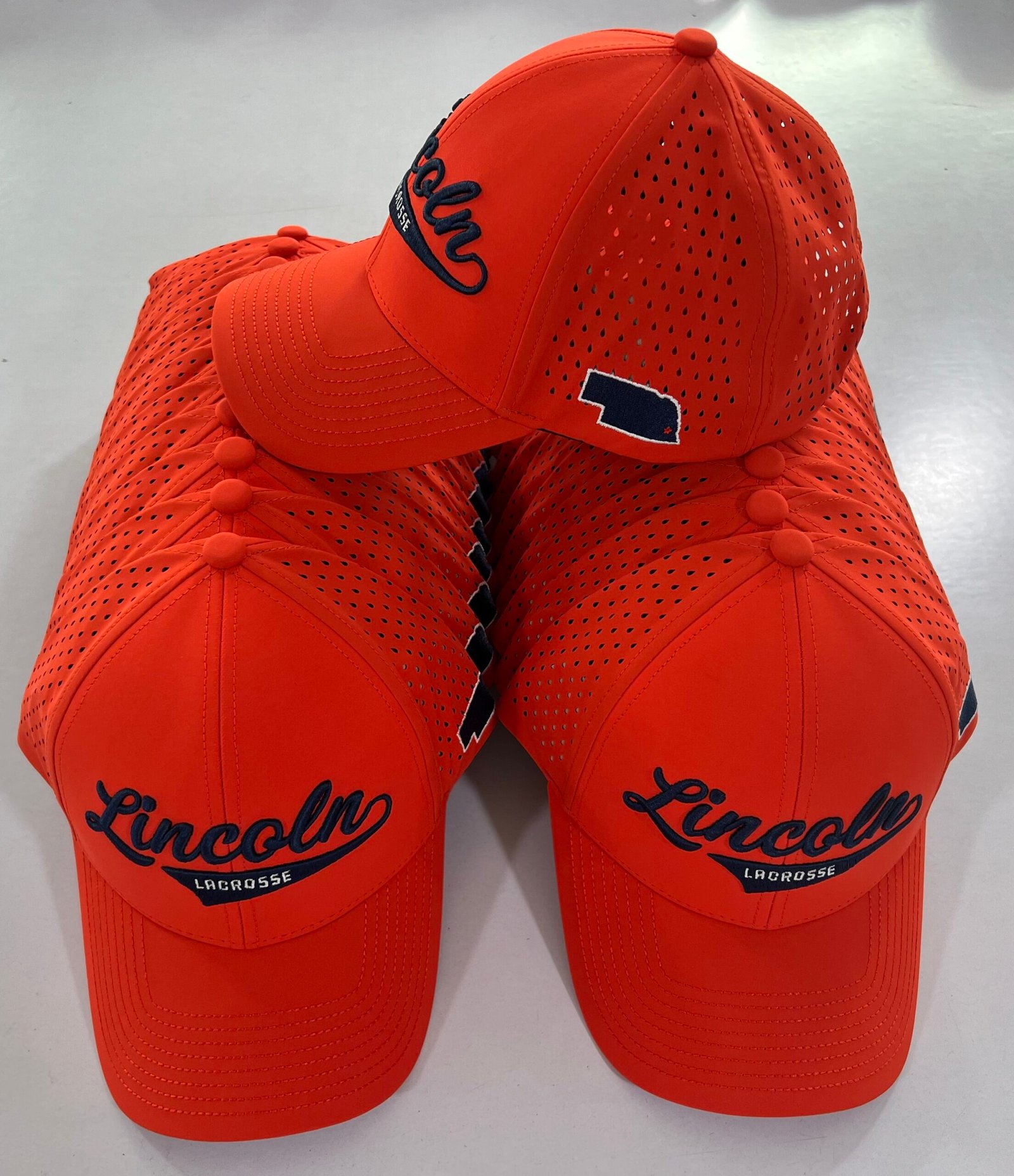
Finding a golf hat manufacturer in China is easy. Finding one that consistently delivers the right quality, pricing, and production schedule is much harder.
If you’re sourcing golf hats for your brand or wholesale business, this guide will help you evaluate factories, avoid expensive mistakes, and choose a manufacturing partner you can trust.
1. Define Your Golf Hat Requirements Before Contacting Manufacturers
Here’s a mistake many buyers make.
They contact five suppliers and ask:
“What’s your best price for 1,000 custom golf hats?”
One supplier quotes $3.50 per piece. Another quotes $4.20. A third quotes $5.10.
Which is the best deal?
You can’t tell yet.
The suppliers may be quoting completely different products.
One might use ordinary polyester. Another might use stretch performance fabric. The third might include laser perforation, premium embroidery, and private-label packaging.
Before comparing manufacturers, make sure they’re quoting the same specifications.
1.1 Choose the Right Golf Hat Style
Golf hats come in different constructions, each made for different markets.
| Golf Hat Style | Main Characteristics | Best For |
| Performance Golf Cap | Lightweight, breathable technical fabrics | Golf apparel brands |
| Laser-Perforated Golf Hat | Ventilation holes in selected panels | Performance headwear collections |
| Golf Rope Hat | Decorative rope along the visor | Golf lifestyle brands |
| Structured Golf Snapback | Defined crown and adjustable closure | Retail and private-label brands |
| Unstructured Golf Cap | Soft crown and relaxed fit | Resorts and casual golf brands |
| Golf Visor | Open-top construction | Golf clubs and tournament merchandise |
For example, if you’re developing a premium performance collection, a lightweight polyester snapback with laser-perforated side panels may suit you better than a traditional cotton promotional cap.
Neither is automatically better.
The right choice relies on your customers, selling price, and planned use.
1.2 Select the Right Fabric
Fabric affects the appearance, comfort, durability, and manufacturing cost of your golf hats.
Polyester
Polyester is commonly used for performance golf headwear because it can be engineered into lightweight, quick-drying, and moisture-management fabrics.
It’s a sensible choice for many performance collections.
Nylon
Nylon can provide a smooth hand feel and lightweight construction.
Some nylon fabrics can also be treated for water resistance, rendering them suitable for certain outdoor collections.
Polyester-Spandex Blends
Adding spandex provides stretch and flexibility.
This can improve comfort and fit when combined with suitable cap construction.
Cotton Twill
Cotton twill suits traditional golf and lifestyle caps.
Itis often chosen for its familiar look and classic texture.
Recycled Polyester
Recycled polyester may suit brands with specific material-sourcing goals.
However, if you intend to make certified recycled-content claims, verify the relevant certification and supply-chain documentation.
1.3 Define Your Customization Requirements
A professional golf hat manufacturer should offer more than a front logo.
Depending on the product, you may need to customize:
- Crown profile and construction
- Fabric composition and weight
- Pantone colors
- Flat or curved visor
- Flat embroidery or 3D embroidery
- Silicone, woven, or embroidered patches
- Laser-perforation patterns
- Snapback or other closures
- Sweatbands and inside taping
- Woven labels and hangtags
- Individual retail packaging
My recommendation is simple:
Prepare one specification sheet and send the same document to every shortlisted supplier.
That way, you’re comparing manufacturers, not different interpretations of your design.
Ready to Discuss Your Golf Hat Specifications?
If you already have a logo, reference photo, or tech pack, you can send your requirements to Shenxiu Outdoors Golf Hat Manufacturers for a factory quotation.
2. Where to Find Golf Hat Manufacturers in China
Once your specifications are clear, it’s time to find suitable suppliers.
Consider three sourcing channels.
2.1 Google Search
Google is especially useful when you’re looking for manufacturers focused on a specific product.
Try searching for:
- golf hat manufacturer China
- golf cap manufacturer China
- golf hat factory China
- golf hat supplier China
- performance golf hat manufacturer
- laser perforated golf hat manufacturer
- private label golf hat manufacturer
- OEM golf cap manufacturer
These searches are more commercially relevant than broad terms such as “golf hats.”
When visiting a supplier’s website, look beyond the product photos.
Does the company explain its manufacturing process?
Can you find information about fabrics, embroidery, sampling, and quality control?
Are there real factory photos or production videos?
Does the supplier provide detailed product specifications?
A professional website is useful, but it doesn’t automatically prove that the company operates a factory.
2.2 B2B Sourcing Platforms
B2B marketplaces may help you discover potential suppliers and request quotations.
However, not every supplier listed as a manufacturer necessarily owns or operates the production facility.
Some businesses are trading companies or sourcing intermediaries.
That isn’t always a problem.
The important question is:
Who will manufacture your products, and who is responsible for quality?
Use sourcing platforms to build a shortlist, then verify the suppliers independently.
2.3 Trade Shows and Industry Referrals
Trade shows allow you to examine physical samples and discuss technical requirements directly.
This may be particularly helpful when evaluating:
- Performance fabrics
- Embroidery quality
- Laser perforation
- Crown construction
- Logo placement
- Finishing quality
Industry referrals can also be valuable.
But remember, a supplier experienced in basic promotional caps may not suit technical golf headwear.
Always evaluate the manufacturer against your specific product requirements.
3. How to Verify a Golf Hat Factory in China
Now we reach one of the most important parts of sourcing.
How do you know whether the supplier is a real factory?
Simply asking, “Are you a manufacturer?” isn’t enough.
You need evidence.
3.1 Verify the Company’s Legal Identity
Ask for the supplier’s registered company name and business registration information.
Compare the details with:
- Company quotation
- Factory address
- Invoice information
- Bank beneficiary
- Certification documents
- Export company information
The information should be consistent or supported by a clear explanation.
For example, some manufacturers use a separate export company.
That arrangement may be legitimate, but you should understand the relationship before transferring money.
3.2 Request a Live Factory Video
A live factory video call is a practical first step.
Ask the supplier to show you its manufacturing facilities.
Relevant areas may include:
Fabric Cutting
Check whether the factory can explain its cutting process and how it controls fabric usage and panel accuracy.
Sewing Production Lines
Look for evidence of actual cap assembly and ask how different constructions are handled.
Embroidery Equipment
If embroidery is important to your design, ask whether the supplier digitizes logos and performs embroidery in-house.
Quality Inspection
Ask where and how the supplier inspects products during production.
Packing and Finished Goods
Check whether the supplier has an organized process for final inspection and packing.
A live video doesn’t replace an independent audit, but it can help you assess whether the supplier understands its own production processes.
3.3 Check In-House Manufacturing Capabilities
Not every factory performs every process internally.
For example, specialized fabric treatments or certain decoration processes may be outsourced.
That’s not automatically a problem.
What matters is transparency.
Ask:
“Which manufacturing processes do you handle in-house, and which are outsourced?”
Then ask how the supplier manages quality for outsourced operations.
A reliable manufacturer should be able to explain the workflow clearly.
3.4 Consider a Third-Party Factory Audit
For large orders or strict compliance requirements, an independent factory audit may be appropriate.
Depending on its scope, an audit can evaluate aspects of the factory’s:
- Production capability
- Management systems
- Quality procedures
- Facility conditions
- Social-compliance practices
An audit is an additional risk-control measure.
It doesn’t replace sample approval or product inspection.
4. Evaluate Golf-Hat-Specific Manufacturing Capabilities
Here’s something many buyers overlook.
A factory can be excellent at producing ordinary baseball caps and still struggle with specialized performance golf hats.
That’s why technical manufacturing experience matters.
4.1 Performance Fabric Experience
Performance fabrics may behave differently from traditional cotton twill during cutting, sewing, and decoration.
For example, lightweight fabrics may be more sensitive to embroidery tension.
Stretch fabrics may require different handling to maintain the intended fit and shape.
Ask the manufacturer to show samples of similar products.
Pay attention to:
- Fabric hand feel
- Crown shape
- Panel symmetry
- Stitching
- Visor construction
- Sweatband attachment
- Overall weight
- Fit consistency
A manufacturer with relevant experience should be able to explain the compromises between different materials and constructions.
4.2 Laser-Perforation Capability
Laser-perforated golf hats are popular in performance headwear because they combine ventilation with a clean technical appearance.
However, the result depends on more than simply making holes in the fabric.
Before approving a laser-perforated design, evaluate:
Hole Size
Do the holes match the approved specification?
Hole Spacing
Is the spacing uniform?
Pattern Alignment
Does the pattern remain symmetrical after assembly?
Fabric Compatibility
Does the selected fabric produce acceptable hole edges and remain durable enough?
Bulk Consistency
Can the factory reproduce the same pattern across hundreds or thousands of pieces?
For buyers developing technical golf headwear, our Golf Hat Manufacturer page provides an overview of available manufacturing and customizing options.
4.3 Embroidery and Logo Capabilities
Your logo is one of the most visible elements of the product.
Different decoration methods have different strengths.
| Logo Method | Main Advantage | Important Consideration |
| Flat Embroidery | Classic branded appearance | Small details need careful digitizing |
| 3D Embroidery | Raised dimensional effect | Works best with suitable shapes and larger elements |
| Silicone Patch | Clean technical appearance | Material and attachment method matter |
| Woven Patch | Suitable for fine woven details | Edge finishing requires approval |
| Embroidered Patch | Traditional textured branding | Patch size and placement matter |
| Printing | Flexible graphic options | Fabric compatibility must be checked |
A professional manufacturer should detect possible logo problems before sampling.
For example, extremely small lettering may need to be enlarged to reproduce clearly.
It’s better to adjust the artwork early than discover an unreadable logo after bulk production.
4.4 OEM, ODM, and Private-Label Manufacturing
These terms are often used interchangeably, but they describe different services.
OEM Manufacturing
The manufacturer produces hats according to your specifications, artwork, or technical criteria. ODM Manufacturing
The supplier provides additional design or product-development support.
Private Label
Products are manufactured with your brand identity, which may include logos, labels, inside branding, hangtags, and packaging.
For a growing golf brand, private-label capability can be especially valuable.
It allows you to develop a recognizable collection rather than simply adding a logo to a generic product.
5. Understand MOQ and Production Capacity
MOQ means Minimum Order Quantity.
It’s one of the first questions most wholesale buyers ask.
And for good reason.
MOQ affects inventory investment, product development costs, and how many designs or colors you can launch.
5.1 Why Golf Hat MOQs Vary
MOQ can depend on:
- Fabric availability
- Custom dyeing
- Production setup
- Logo preparation
- Number of colors
- Specialized accessories
- Packaging requirements
- Production efficiency
For example, using available polyester fabric may have different minimum requirements from developing a custom-dyed fabric in a specific Pantone color.
At Shenxiu Outdoors, our standard custom headwear MOQ is 200 pieces per design per color, subject to final specifications.
Other manufacturers may have different requirements.
The important thing is to request an MOQ based on your actual product.
5.2 MOQ Is Not the Same as Production Capacity
A factory that accepts 200-piece orders isn’t necessarily capable of producing 20,000 pieces within a short delivery window.
And a factory with substantial production capacity may not be interested in small development orders.
Ask two separate questions:
- What is the minimum quantity for my specification?
- What quantity can you reliably produce within my required delivery schedule?
Both answers matter.
5.3 Think About Repeat Orders
Your first order might be 500 pieces.
If sales go well, the next order could be 3,000 or 10,000 pieces.
Can the manufacturer reproduce the same fabric, color, logo, and fit?
Can it increase production without jeopardizing consistency?
A reliable manufacturing partner should support your growth, not create new sourcing problems as your business expands.
6. Why You Should Approve a Sample Before Bulk Production
If there’s one step I’d strongly recommend to every new buyer, it’s this:
Never approve a new custom golf hat solely from photographs or written promises.
Request a physical sample whenever practical.
A sample helps you evaluate the product before committing to bulk manufacturing.
But don’t simply look at it and say, “Looks good.”
Inspect it thoroughly.
6.1 Check the Overall Construction
Inspect:
- Crown shape
- Panel symmetry
- Visor curvature
- Stitching alignment
- Closure function
- Sweatband attachment
- Internal finishing
A cap may look attractive on a table but fit poorly when worn.
6.2 Check Measurements
Compare the sample against the agreed specifications.
Relevant measurements may include crown height, visor dimensions, circumference, and other construction-specific requirements.
Agree on acceptable tolerances before production.
6.3 Check Fabric and Color
Does the fabric match the approved reference?
Does it have the expected weight and hand feel?
Is the color consistent with the agreed standard?
For Pantone colors, evaluate the sample under proper lighting.
6.4 Check Logo Quality
Pay attention to:
- Logo dimensions
- Placement
- Thread color
- Stitch density
- Edge quality
- Small lettering
- Raised embroidery consistency
For patches, inspect the attachment and finishing.
6.5 Check Performance Details
For laser-perforated hats, inspect hole size, spacing, placement, and edge quality.
For water-resistant or quick-drying products, ask what evidence supports the performance claims.
A visual inspection alone cannot confirm every technical property.
6.6 Keep the Approved Sample as a Production Reference
Once the sample is approved, confirm the final specifications in writing.
The approved sample and specification sheet should become the reference for bulk production.
This makes future quality discussions much more objective.
Need Help Evaluating Your Golf Hat Design?
Send your logo, reference image, fabric requirements, and estimated quantity to Shenxiu Outdoors.
Request a Pre-Production Sample
7. Evaluate the Manufacturer’s Quality-Control System
Every supplier claims to produce high-quality products.
But the better question is:
How does the factory actually control quality?
A reliable manufacturer should be able to explain its inspection procedures.
7.1 Incoming Material Inspection
Before production, check relevant materials against order requirements.
This may include:
- Fabric composition and appearance
- Color
- Closures
- Labels
- Decoration materials
- Accessories
Identifying material problems early may prevent more expensive issues later.
7.2 In-Process Inspection
During production, the factory should monitor key operations.
For golf hats, common checkpoints include:
- Panel alignment
- Stitching
- Crown construction
- Visor assembly
- Embroidery positioning
- Laser-hole consistency
- Closure installation
A defect found during production is generally easier to correct than one discovered after the entire order has been packed.
7.3 Final Inspection
Before shipment, check finished products against the approved requirements.
Depending on the order, this may involve a defined sampling procedure or more extensive inspection.
Buyers should agree on inspection criteria, defect classifications, and acceptance requirements in advance.
7.4 Request Inspection Evidence
Ask whether the manufacturer can provide:
- Inspection records
- Measurement reports
- Product photographs
- Packing details
- Pre-shipment inspection support
For larger orders, an independent inspection company may be useful.
A supplier’s willingness to discuss measurable quality standards tells you more than the phrase “premium quality.”
8. Verify Certifications and Compliance Claims
Certifications matter when supplying established brands, retailers, or corporate customers.
But a certificate logo displayed on a website isn’t sufficient verification.
8.1 Understanding amfori BSCI
amfori BSCI is a social-compliance auditing and improvement system.
Do not confuse it with a general product-quality certification.
If a supplier refers to BSCI, request information about the relevant audit and facility.
Verify the information through appropriate authorized channels.
8.2 Understanding GRS
The Global Recycled Standard relates to recycled content and associated chain-of-custody and processing requirements.
If your brand intends to make a certified recycled-material claim, confirm the applicable certification scope and transaction documentation.
Don’t assume that using recycled polyester automatically entitles every finished product to carry a certification claim.
8.3 Match Documents to the Actual Supplier
Check:
- Legal company name
- Facility address
- Certification scope
- Validity
- Issuing organization
- Relevance to the actual product
9. Compare Golf Hat Manufacturer Quotations
Let’s return to the price question.
Suppose you’ve received quotations from three different suppliers.
| Supplier | Unite Price | Product Specifications |
| Supplier A | $3.50 | Standard polyester, basic embroidery |
| Supplier B | $4.20 | Stretch performance fabric, custom labels |
| Supplier C | $5.10 | Technical fabric, laser perforation, premium embroidery |
These are hypothetical examples for comparison, not current factory quotations.
Which supplier offers the best value?
You can’t tell from the unit price alone.
The specifications are different.
9.1 Compare the Same Specifications
Before comparing quotations, make sure every supplier is pricing the same product.
A complete golf hat quotation should include:
| Quotation Item | What You Should Confirm |
| Hat Construction | 5-panel, 6-panel, structured or unstructured |
| Fabric | Composition, weight and performance requirements |
| Color | Standard color or custom Pantone |
| Logo | Decoration method, dimensions, and placement |
| Quantity | Pieces per design and color |
| Labels | Woven labels, inside labels and hangtags |
| Packaging | Individual packaging and carton requirements |
| Sampling | Sample cost and development time |
| Production | Lead time after final approval |
| Shipping | Incoterm and named destination |
| Payment | Deposit, balance and payment method |
Here’s a useful tip.
Ask every supplier to quote against the same specification sheet and clearly identify any differences. Otherwise, the lowest quotation may represent a lower-cost product.
9.2 Understand the Total Landed Cost
The factory price is only one part of your sourcing cost.
Depending on the agreed terms, your total cost may include:
- Manufacturing
- Sampling and development
- Packaging
- Freight
- Insurance
- Import duties and taxes
- Customs clearance
- Third-party inspection
- Potential rework or replacements
For example, an EXW quotation and a DDP quotation include different responsibilities and cost allocations.
Comparing them as if they were identical can lead to incorrect purchasing decisions.
9.3 Calculate the Cost of Poor Quality
Imagine you’re purchasing 2,000 golf hats.
Supplier A is $0.40 cheaper per piece than Supplier B.
That represents an $800 saving.
Sounds good, right?
But what if Supplier A delivers hats with inconsistent embroidery, incorrect sizing, or unacceptable color variation?
The cost of replacements, delayed deliveries, customer complaints, and lost sales could exceed the original one-time saving.
That doesn’t mean expensive suppliers are always better.
It means the best supplier offers the strongest overall value, not necessarily the lowest unit price.
10. Evaluate Production Lead Time and Communication
For wholesale buyers, reliable delivery matters as much as product quality.
A delayed order can cause serious problems, especially when your products are tied to golf tournaments, retail launches, or seasonal promotions.
10.1 Understand the Complete Manufacturing Timeline
A typical custom golf hat project follows this process:
Design Confirmation → Sampling → Sample Approval → Material Preparation → Bulk Production → Quality Inspection → Packaging → Shipping
Each stage requires time.
When a supplier quotes a production lead time, ask exactly when that period begins.
Does it start after you receive the deposit?
After the sample is approved?
Or after all materials are available?
Confirm these details in writing.
10.2 Separate Sampling and Bulk Production
Sampling and bulk manufacturing are different stages.
Sampling time depends on:
- Artwork readiness
- Fabric availability
- Logo complexity
- Special materials or trims
- Number of sample revisions
Bulk production depends on:
- Order quantity
- Production-line availability
- Material preparation
- Manufacturing complexity
- Factory workload
- Quality-control requirements
Avoid suppliers who offer ane an unusually short schedule without explaining how they will achieve it.
10.3 Evaluate Supplier Communication
Here’s something I’ve learned about supplier communication.
A fast response isn’t necessarily a good response.
Suppose you ask:
“Can this small logo be embroidered on lightweight polyester?”
Supplier A replies:
“Yes, no problem.”
Supplier B replies:
“The logo can be produced, but the lettering is very small. We recommend increasing the text size to improve embroidery clarity. Let’s confirm it through sampling.”
Which response gives you more confidence?
Supplier B has identified a potential production risk and suggested a feasible solution. That’s the type of communication you want from a long-term manufacturing partner.
10.4 Establish Production Milestones
Before placing a bulk order, agree on the main production milestones.
For example:
| Milestone | What Should Be Confirmed |
| Order Confirmation | Specifications, quantity and commercial terms |
| Sample Approval | Final approved product standard |
| Material Preparation | Fabric, trims and accessories available |
| Production Start | Confirmed manufacturing schedule |
| Production Progress | Quantity completed and any issues |
| Final Inspection | Product quality and packing approval |
| Shipment | Shipping documents and dispatch information |
This creates a clear, explicit communication process and helps buyers identify likely delays early.
10.5 Plan Around Your Selling Season
If your golf hats must arrive before a tournament or retail launch, work backward from the required warehouse delivery date.
Allow sufficient time for production, inspection, international shipping, customs clearance, and unanticipated delays.
A realistic schedule is more valuable than an aggressive promise the supplier cannot keep.
11. Red Flags When Choosing a Golf Hat Supplier in China
Not every sourcing problem can be prevented.
However, several warning signs should encourage you to investigate a supplier more carefully.
Red Flag 1: The Supplier Cannot Explain Its Manufacturing Process
If a supplier repeatedly avoids technical questions about materials, embroidery, construction, or quality control, request additional evidence before proceeding.
Red Flag 2: The Quotation Is Suspiciously Low
A low price isn’t automatically a warning sign.
But check whether the supplier has excluded important specifications, decoration, packaging, inspection, or shipping costs.
Red Flag 3: The Sample Doesn’t Match Your Requirements
Don’t approve a sample with outstanding problems simply because the supplier promises to fix everything during bulk production.
Resolve the issues first.
Red Flag 4: The Factory Refuses Reasonable Verification
A supplier unwilling to provide appropriate company information, manufacturing evidence, or agreed inspection access may present unnecessary sourcing risks.
Red Flag 5: Production Lead Times Are Unrealistic
If a factory commits to a highly customized order within an unusually short period, demand a detailed schedule and confirmation of material availability.
Red Flag 6: Important Commercial Terms Keep Changing
Document and investigate repeated changes to quotations, payment details, specifications, or delivery commitments.
Red Flag 7: Quality Standards Are Vague
Statements such as “best quality” or “100% perfect” are not substitutes for measurable inspection criteria.
The takeaway: Trust documented evidence and demonstrated manufacturing performance—not promises alone.
12. Use a Golf Hat Manufacturer Evaluation Scorecard
Choosing a supplier based only on price or personal impressions can be risky.
A structured evaluation scorecard helps you compare manufacturers more objectively.
Here’s a practical example.
| Evaluation Criteria | Suggested Weight | What to Evaluate |
| Manufacturing Capability | 20% | Can the factory produce your exact specifications? |
| Sample Quality | 20% | Does the sample meet approved requirements? |
| Quality Control | 15% | Are inspection procedures measurable and documented? |
| Production Capacity | 10% | Can the factory support current and future orders? |
| Communication | 10% | Are responses accurate, clear and technically useful? |
| Delivery Reliability | 10% | Can the supplier meet realistic production schedules? |
| Pricing & Commercial Terms | 10% | Are quotations complete and competitive? |
| Compliance & Documentation | 5% | Can you verify relevant claims and documents? |
| Total | 100% |
These are suggested weights. Adjust them according to your purchasing priorities and mandatory compliance requirements.
How to Use the Scorecard
Give each supplier a score from 1 to 5 for every category.
Then multiply the score by the category weight.
For example, if a supplier scores 4 out of 5 for manufacturing capability:
4 ÷ 5 × 20 = 16 points
Repeat the calculation for all categories.
The maximum total score is 100.
This allows you to compare suppliers using a steady framework
What Matters Most for Different Buyers?
For a premium golf apparel brand, manufacturing capability and sample quality may deserve greater weight.
For a promotional merchandise distributor working against a fixed event deadline, delivery reliability may matter most.
For a retailer with strict compliance requirements, relevant audit and certification verification may be mandatory rather than simply another scored category.
The scorecard is a decision-support tool, not a substitute for judgment.
13. What Information Should You Send to a Golf Hat Manufacturer for an Accurate Quote?
By now, you should have a much clearer understanding of what makes a reliable golf hat manufacturer.
The next step is preparing a professional request for quotation, commonly called an RFQ.
A detailed RFQ helps manufacturers understand your project and reduces unnecessary back-and-forth communication.
13.1 Product Specifications
Include:
- Golf hat style
- Number of panels
- Structured or unstructured crown
- Fabric composition
- Fabric weight or reference
- Visor style
- Closure type
- Sweatband requirements
- Performance features
- Laser-perforation requirements, if applicable
13.2 Branding Requirements
Include:
- Logo artwork
- Logo dimensions
- Decoration method
- Logo placement
- Pantone colors
- Woven labels
- Inside taping
- Hangtags
- Individual packaging
13.3 Commercial Requirements
Include:
- Quantity per design
- Quantity per color
- Destination country
- Required delivery date
- Target budget, if available
- Sampling requirements
- Preferred shipping terms
If you’re unsure about a technical detail, say so.
A capable manufacturer should be able to explain suitable options and how they affect price, MOQ, and production.
Example: Professional Golf Hat RFQ
EXAMPLE PROCUREMENT REQUEST
Subject: Custom Performance Golf Hat Manufacturing Inquiry
Hello,
We’re looking for a reliable manufacturer for our private-label performance golf hat collection.
Our initial requirements are:
- Style: 6-panel structured performance snapback
- Fabric: Lightweight polyester
- Color: Navy blue
- Front Logo: White embroidery
- Ventilation: Laser-perforated side panels
- Closure: Adjustable snapback
- Quantity: 500 pieces
- Packaging: Individual polybag with custom hangtag
- Destination: United Kingdom
Please kindly verify your sample arrangements, estimated production lead time, and quotation based on these specifications.
We can provide logo artwork and reference photographs.
Thank you.
A request like this makes it easier for suppliers to provide accurate quotations.
It also makes comparing their responses much more straightforward.
14. Why Work With a Specialized Golf Hat Manufacturer?
Let’s bring everything together.
A specialized golf hat manufacturer should understand the relationship between:
Performance Materials + Construction + Decoration + Fit + Quality Control + Production Consistency
That expertise becomes particularly valuable when your products involve technical fabrics, laser perforation, custom branding, and private-label details.
For golf brands and distributors, the goal isn’t simply to purchase hats at the lowest possible price.
It’s to develop a product collection that customers recognize, trust, and want to buy again.
Working With Shenxiu Outdoors
At Shenxiu Outdoors, we focus on B2B custom headwear manufacturing, including performance golf hats, snapbacks, rope hats, baseball caps, trucker hats, and other branded headwear.
Our manufacturing services include:
- OEM and ODM product development
- Performance fabric options
- Laser-perforated golf hat designs
- Flat and 3D embroidery
- Custom patches and branding
- Pantone color matching
- Custom labels and packaging
- Pre-production sample development
- Bulk manufacturing and quality checks
Our standard custom headwear MOQ is 200 pieces per design per color, subject to the final product specifications.
If you’re developing a new golf headwear collection or looking for an alternative supplier, explore our Golf Hat Manufacturing Services.
Ready to Develop Your Next Golf Hat Collection?
Send your logo, reference design, estimated quantity, and required delivery date.
Our team can review your specifications and discuss suitable manufacturing options before sampling and bulk production.
Final Thoughts
Finding a reliable golf hat manufacturer in China doesn’t have to be complicated.
But it does require more than collecting quotations.
Start with a clear product specification.
Verify the supplier’s manufacturing capabilities.
Evaluate samples and quality-control procedures.
Compare complete quotations, not just unit prices.
And make sure the production schedule supports your business requirements.
The right manufacturing partner should help you reduce sourcing risks, keep consistent product quality, and support your brand as order volumes grow.
Looking for a Reliable Golf Hat Manufacturer in China?
Shenxiu Outdoors supports B2B buyers developing custom performance golf hats, private-label headwear, and wholesale collections.
Send your design, logo, target quantity, and delivery requirements to discuss your next project.