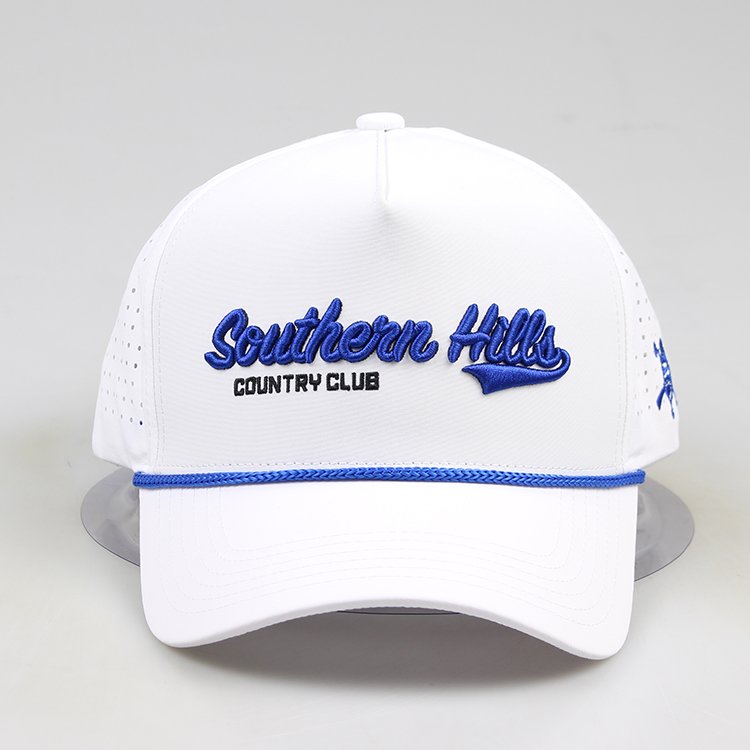
Choose a performance golf hat for hot weather by checking the finished hat’s airflow, sweatband, weight, fit and sun coverage together. A lightweight shell can still feel restrictive when backed by a heavy front panel, while a highly ventilated crown may leave areas exposed to sunlight.
For brands, clubs and event buyers, the practical question is whether a finished sample works for the intended users and conditions. “Performance” is a product description that needs supporting details, not a complete specification.
Start with the Conditions of Use
Define whether the hat will be used for walking rounds, cart-based play, practice sessions or staff duties. Record the likely humidity, duration outdoors, wind exposure and fit needs. These inputs help a supplier propose a relevant construction without relying on a generic summer-cap label.
In humid conditions, give particular attention to how the band and crown feel after use. In a hot, exposed location, review shade and coverage alongside ventilation. No fabric name can answer all of those questions.
| Use condition | Sample check | Purchasing question |
|---|---|---|
| Long walking rounds | Pressure, stability and moisture feel during wear | Can different users trial the same finished sample? |
| Humid conditions | Band saturation and drying between uses | What moisture-management evidence is available? |
| Strong sun exposure | Crown and brim coverage | Which panels and colors are covered by UV testing? |
| Windy conditions | Retention during movement and swing | Does the adjustment range suit the users? |
| Club or promotional branding | Comfort behind embroidery or patches | Can the trial sample carry the final decoration? |
Check Where Air Can Actually Move
Examine the side and rear panels, eyelets, lining and front support. Ask the supplier to identify the fabric construction and ventilation layout. A visible opening in an outer layer may be backed by another material, so look inside as well as outside.
Compare complete samples rather than deciding that mesh always beats a woven fabric. Mesh location, lining, fit and exposed areas all affect the decision. For a measured fabric comparison, agree on a suitable air-permeability test; ASTM lists D737 for air permeability of textile fabrics. A fabric result still does not measure comfort of the entire hat.
Evaluate the Sweatband Separately
The sweatband is the part in sustained contact with the forehead. Inspect its width, seams, surface feel and connection to the shell. A technical outer fabric does not establish how the band handles moisture.
Moisture movement and evaporation are connected but different processes. Patagonia’s explanation of moisture wicking describes how fabric construction and treatments help move moisture. For buyers, the implication is to request evidence for the actual material rather than infer performance from a fiber label.
Ask whether a report concerns the shell, band or assembled product, and whether the performance has been assessed after the proposed care process. Keep any simple wear trial distinct from laboratory testing.
Assess Weight, Fit and Decoration Together
Request the finished hat weight in a specified size, with the same logo and trim intended for production. Fabric mass in grams per square metre describes a material area; it is not the weight of a complete hat.
During a sample fitting, check pressure at the forehead, space above the ears and stability while turning or swinging. An adjustment strap may change circumference without solving an unsuitable crown depth. Test more than one wearer before applying “one size” to an entire group.
Review the reverse side of embroidery and any patch backing. The decorated sample can feel different from the blank version, and this is easier to address before production approval.
Balance Ventilation with Coverage
A cap, visor and surrounding-brim hat expose different areas. A visor leaves the top of the head open; a front bill does not shade all sides of the head. The CDC’s sun-safety advice recommends a brim around the hat for shading the face, ears and neck.
When comparing products, record where the openings are and which areas remain uncovered. Do not treat a ventilated panel or a UPF claim for one fabric as proof of complete protection.
A Useful Sample-Approval Checklist
- Document the intended use, size range and wearers.
- Compare hats with final lining, decoration and closure.
- Record the same observations for each sample: fit, pressure, stability and moisture feel.
- Review fabric reports under comparable methods and conditions.
- Check appearance and fit after the approved cleaning process.
- Retain the approved sample and its specification for production reference.
Before requesting a quotation, send your supplier the climate, intended use, user group and branding requirements. Ask for finished samples and material information that address those conditions. Send your headwear requirements to Shenxiu Outdoors.